
In observance of Juneteenth, our office will be closed on Friday June 19, 2026. We will reopen on Saturday June 20, 2026, with normal business hours.
To avoid any treatment disruptions, please schedule all appointments accordingly.

Living with bipolar disorder can feel like a constant cycle of highs and lows — moments of elevated energy followed by deep emotional crashes. At C-Line Community Outreach Services, we help clients stabilize those fluctuations and build steady, fulfilling lives through structured, compassionate, and clinically proven treatment.
Serving the Jersey City and Paterson communities since 1998, C-Line provides individualized therapy for bipolar disorder that combines clinical expertise, education, and emotional support. Our goal is simple: to help you regain balance, manage symptoms, and thrive with confidence.
Bipolar disorder is a mood disorder characterized by alternating periods of elevated (manic or hypomanic) and depressed moods. These mood shifts affect energy levels, thinking, decision-making, and relationships.
Types of bipolar disorder we treat include:
Our clinicians focus on helping clients identify patterns, understand triggers, and develop personalized strategies to manage emotional and behavioral stability.
Symptoms vary by individual, but many clients experience:
Manic or Hypomanic Symptoms:
Depressive Symptoms:
C-Line’s clinicians teach clients to recognize early warning signs so they can intervene before mood shifts become overwhelming.
C-Line takes an integrated, long-term approach that combines emotional regulation, cognitive restructuring, and structured lifestyle planning. Each treatment plan is individualized to the client’s needs, preferences, and diagnosis type.
Our process includes:
We work closely with each client to create sustainable change, not short-term relief.
Our clinicians utilize multiple therapeutic methods proven effective for managing bipolar disorder, including:
These methods are adaptable and personalized, ensuring each client receives care aligned with their life, culture, and goals.
While C-Line focuses on therapy and behavioral treatment, we understand that many individuals benefit from medication as part of a comprehensive care plan. Our clinicians collaborate with psychiatrists and primary care providers to ensure safe, effective coordination between therapy and medical management.
Clients remain supported throughout every phase of treatment, with consistent check-ins to monitor progress and ensure stability.
Living with bipolar disorder requires balance across emotional, relational, and practical aspects of life. C-Line helps clients integrate coping tools into their routines through:
This whole-person approach helps clients achieve not just mood balance but a sense of empowerment and control.
It’s common for bipolar disorder to appear alongside other challenges such as anxiety, trauma, or substance use. C-Line’s integrated dual-diagnosis treatment ensures that these conditions are addressed together rather than separately.
Clients have access to specialized programs like:
By addressing all factors contributing to distress, we help clients sustain meaningful, lasting change.
Bipolar disorder affects not only the individual but also loved ones. C-Line offers Family Therapy and caregiver education to help families learn how to provide structured, compassionate support while maintaining their own wellbeing.
Families gain practical strategies for communication, crisis prevention, and emotional balance — turning home environments into strong support systems.
Clients who engage in ongoing therapy for bipolar disorder often experience:
C-Line’s clinicians celebrate each milestone, helping clients recognize progress at every step.
C-Line offers multiple formats to make therapy consistent and convenient:
Our approach ensures that every client can access quality mental health care without barriers.
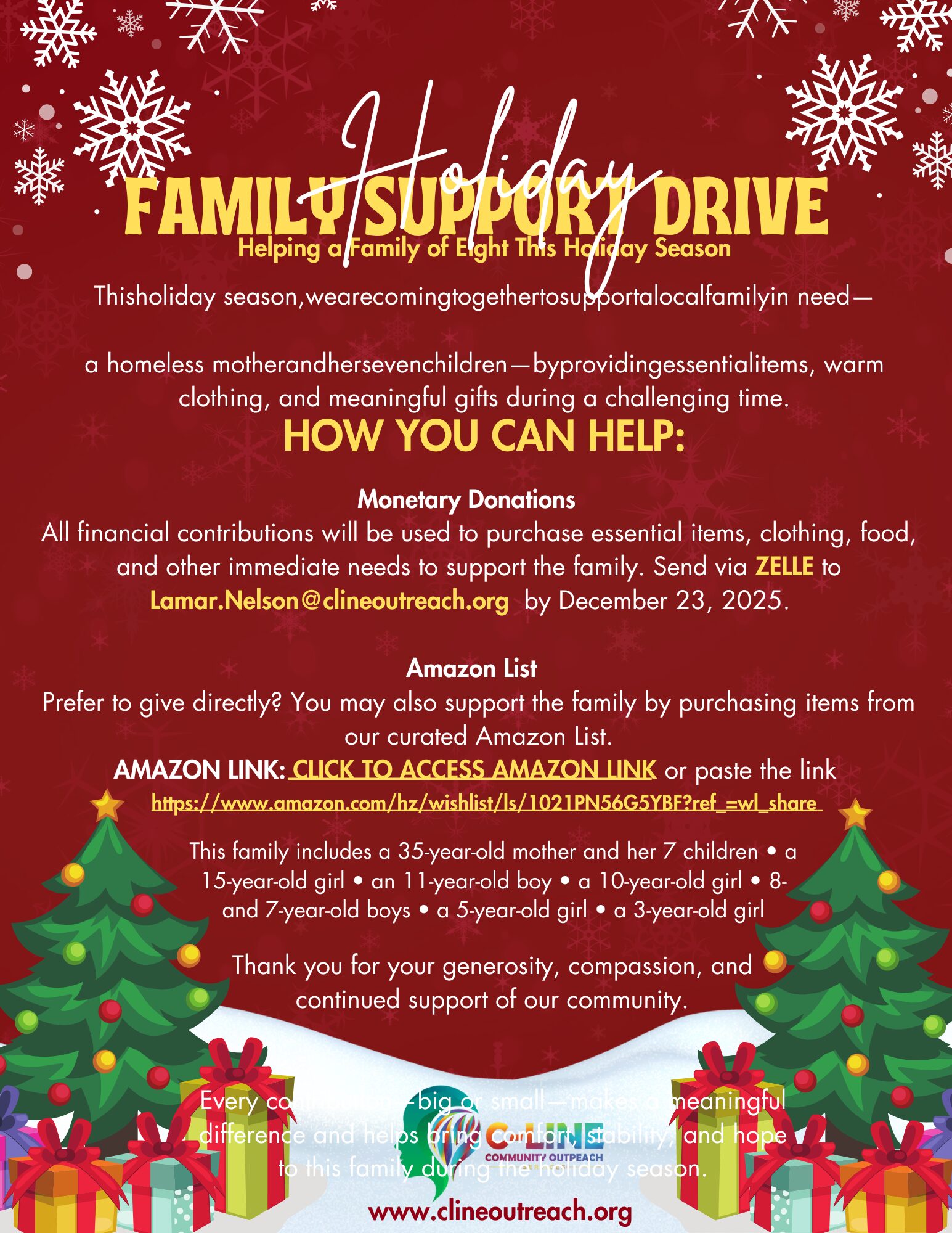
Join Our Christmas Holiday Drive
Supporting families, spreading joy, and strengthening our community.
This holiday season, C-Line is gathering food, clothing, and toys to share with individuals and families in need. Your generosity helps create warmth, connection, and hope during a meaningful time of year. All ages and community members are welcome to participate.
C-Line Community Outreach Services
Date: Saturday, Dec 20, 2025
Time: 12pm to 3pm
Location: 78 Martin Luther King Drive, Jersey City, NJ 07305
C-Line Counseling Center
Date: Saturday, Dec 20, 2025
Time: 12pm to 3pm
Location: 111 Washington St
Paterson, NJ 07505
We Are Still Accepting Donations
We welcome donations of non perishable foods, toys for children, new and gently used clothing, and in-kind items. Every gift directly supports individuals and families in our community, helping them experience a brighter and more meaningful Christmas.
Join Us for a Free Thanksgiving Feast
A warm meal, shared together. Open to all community members.
C-Line invites you to our annual Thanksgiving Feast! Enjoy a free holiday meal surrounded by support, connection, and community. All ages welcome.
C-Line Community Outreach Services
Date: Thursday, Nov 27, 2025
Time: 11am to 2pm
Location: 78 Martin Luther King Jr Drive Jersey City, NJ 07305
C-Line Counseling Center
Date: Wednesday, Nov 26, 2025
Time: 1pm to 4pm
Location: Paterson Library, 250 Broadway Paterson NJ 07501
We Are Still Accepting Donations
We are also accepting donations to help local families enjoy a meaningful holiday. Monetary gifts, non perishable foods, in-kind items, and new or gently used clothing are appreciated.