
In observance of Juneteenth, our office will be closed on Friday June 19, 2026. We will reopen on Saturday June 20, 2026, with normal business hours.
To avoid any treatment disruptions, please schedule all appointments accordingly.

Depression can make even the simplest parts of life feel heavy — getting out of bed, connecting with others, or finding motivation can seem impossible. At C-Line Community Outreach Services, we help clients understand that depression is not a personal failure. It’s a treatable condition that deserves care, compassion, and proven clinical support.
Since 1998, C-Line has guided individuals and families across Jersey City and Paterson through healing with evidence-based, person-centered treatment. Our goal is to help you regain emotional balance, restore motivation, and rediscover meaning in your life.
Depression can stem from many factors — life transitions, trauma, loss, chronic stress, or chemical imbalance. It often shows up as persistent sadness, fatigue, or disinterest in once-enjoyable activities.
At C-Line, we focus on identifying the underlying causes, addressing current symptoms, and helping clients rebuild resilience through structured therapeutic support.
Common forms of depression we treat include:
While everyone’s experience is unique, common symptoms may include:
Recognizing these symptoms is the first step toward healing. C-Line’s clinicians provide a safe, confidential space to explore what you’re feeling and why.
C-Line’s depression treatment combines compassion with evidence-based science. Our clinicians tailor therapy to meet your individual needs, ensuring both immediate relief and long-term emotional growth.
Treatment may include:
Each session is goal-oriented, measurable, and delivered with empathy and respect.
Depression often overlaps with anxiety, trauma, or substance use disorders. C-Line offers integrated dual diagnosis treatment to ensure that all contributing factors are addressed together.
This approach allows clients to heal fully — emotionally, mentally, and physically — rather than only managing isolated symptoms.
Depression can affect not just the individual but also their family and relationships. C-Line includes loved ones in the healing process when appropriate, helping families learn how to communicate effectively, provide support, and maintain healthy boundaries.
Family Therapy and Parent and Caregiver Counseling are available as part of our broader treatment model to strengthen the entire support network.
Clients who complete therapy for depression at C-Line often report:
We don’t just aim to reduce symptoms — we help clients build lives that feel worth living again.
C-Line provides depression treatment for all ages and life stages:
Our clinicians adapt therapy techniques to fit each client’s goals and developmental stage.
To make recovery accessible, C-Line offers:
Our flexible scheduling ensures you never have to choose between healing and daily obligations.
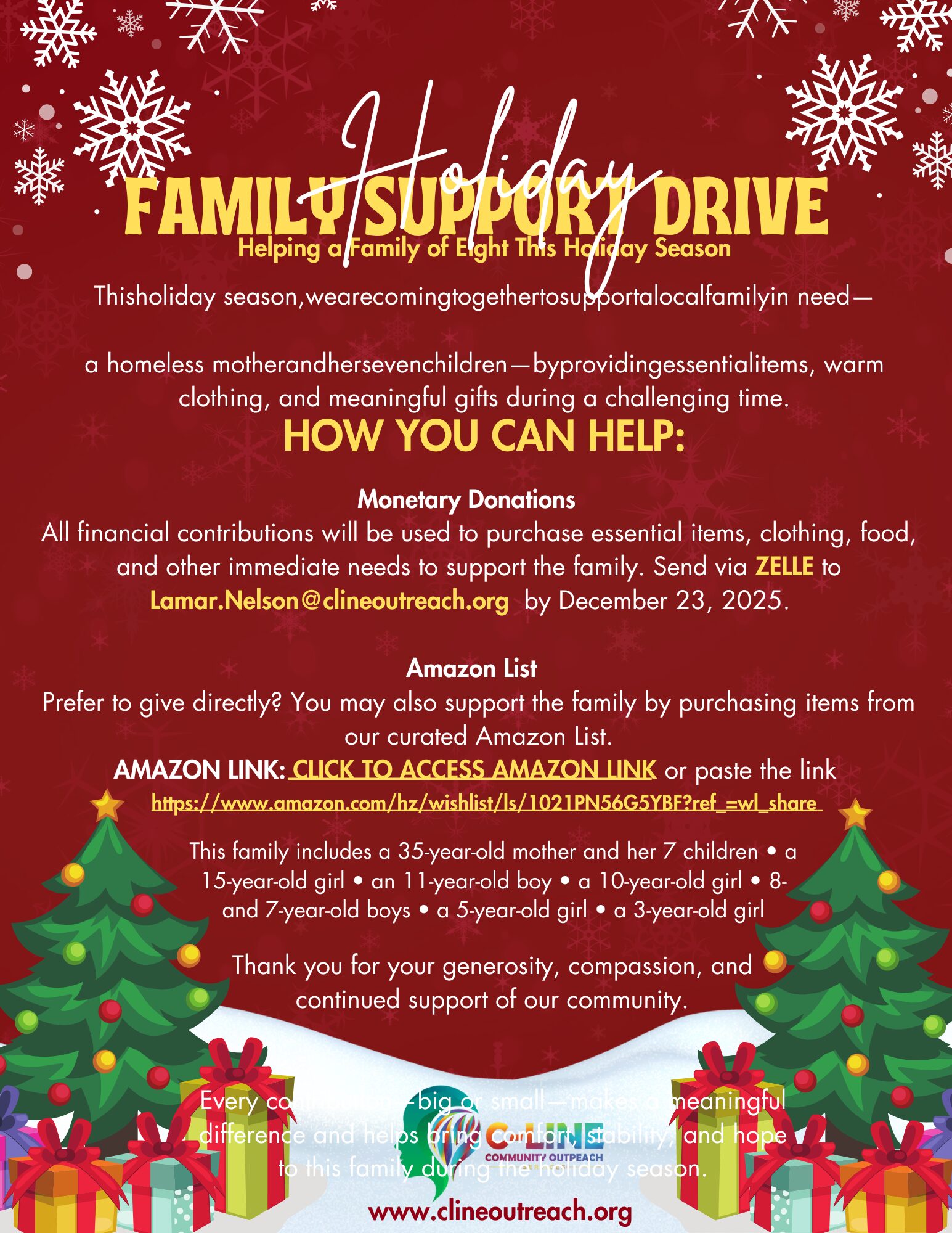
Join Our Christmas Holiday Drive
Supporting families, spreading joy, and strengthening our community.
This holiday season, C-Line is gathering food, clothing, and toys to share with individuals and families in need. Your generosity helps create warmth, connection, and hope during a meaningful time of year. All ages and community members are welcome to participate.
C-Line Community Outreach Services
Date: Saturday, Dec 20, 2025
Time: 12pm to 3pm
Location: 78 Martin Luther King Drive, Jersey City, NJ 07305
C-Line Counseling Center
Date: Saturday, Dec 20, 2025
Time: 12pm to 3pm
Location: 111 Washington St
Paterson, NJ 07505
We Are Still Accepting Donations
We welcome donations of non perishable foods, toys for children, new and gently used clothing, and in-kind items. Every gift directly supports individuals and families in our community, helping them experience a brighter and more meaningful Christmas.
Join Us for a Free Thanksgiving Feast
A warm meal, shared together. Open to all community members.
C-Line invites you to our annual Thanksgiving Feast! Enjoy a free holiday meal surrounded by support, connection, and community. All ages welcome.
C-Line Community Outreach Services
Date: Thursday, Nov 27, 2025
Time: 11am to 2pm
Location: 78 Martin Luther King Jr Drive Jersey City, NJ 07305
C-Line Counseling Center
Date: Wednesday, Nov 26, 2025
Time: 1pm to 4pm
Location: Paterson Library, 250 Broadway Paterson NJ 07501
We Are Still Accepting Donations
We are also accepting donations to help local families enjoy a meaningful holiday. Monetary gifts, non perishable foods, in-kind items, and new or gently used clothing are appreciated.